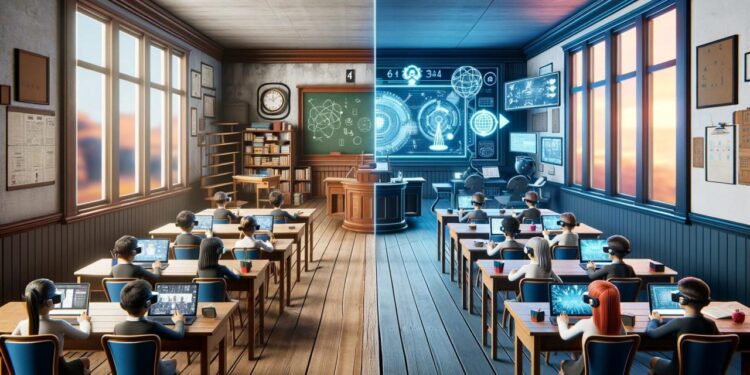
The hallowed halls of education, for centuries, have echoed with a familiar rhythm: a teacher at the front, students in rows, and a one-size-fits-all curriculum delivered to the masses. While this model has educated generations, its inherent limitations are starkly evident in the 21st century. Students struggle at different paces, curiosity is often standardized out of the classroom, and personalized attention is a luxury few educational systems can afford. But a profound transformation is underway, quietly revolutionizing the very fabric of how we learn. We are standing at the precipice of an educational renaissance, powered not by chalk and blackboards, but by algorithms and data. At the forefront of this revolution are AI tutors, intelligent digital mentors that are moving from science fiction to classroom reality, promising a future where every student has a personal guide on their learning journey.
The concept isn’t merely about digitizing textbooks or creating flashy apps. It’s about a fundamental shift from a monolithic educational model to a dynamic, responsive, and deeply personalized learning ecosystem. AI tutors are sophisticated software systems powered by machine learning, natural language processing, and vast repositories of knowledge. They are designed to understand a student’s unique learning style, pinpoint knowledge gaps with surgical precision, and adapt instructional material in real-time. This is not about replacing teachers, but about augmenting their capabilities and freeing them to do what humans do best: inspire, mentor, and foster critical human connections. This article delves deep into the multifaceted ways AI tutors are reshaping modern education, exploring their mechanisms, benefits, challenges, and the exciting future they are building.
A. Deconstructing the Engine: How AI Tutors Actually Function
To appreciate the impact of AI tutors, one must first understand the sophisticated technology that powers them. They are far more than simple question-and-answer databases.
A. Adaptive Learning Algorithms: This is the core intelligence of an AI tutor. These algorithms continuously analyze a student’s interactions how quickly they answer questions, which ones they get wrong, where they hesitate, and even the paths they take to solve a problem. With each interaction, the system builds a refined “knowledge graph” of the student’s understanding. If a student consistently fails at algebra problems involving fractions, the AI doesn’t just mark them wrong; it deduces a fundamental gap in their understanding of fractions and proactively revisits that foundational concept before proceeding.
B. Natural Language Processing (NLP): NLP allows the AI to understand and generate human language. This enables students to ask questions in their own words, like “Why is the sky blue?” instead of being forced to use specific keywords. Advanced AI tutors can engage in multi-turn, conversational dialogues, clarifying doubts and probing the student’s reasoning, much like a human tutor would during an office hours session.
C. Data Analytics and Predictive Modeling: AI tutors are voracious collectors of non-judgmental data. This data is used to predict future performance and identify at-risk students long before they fail an exam. It can flag that a student’s engagement is dropping or that their pace has slowed significantly, allowing for early intervention from a human teacher.
D. Personalized Learning Pathways: Based on the continuous analysis, the AI constructs a unique learning journey for each student. One student might breeze through basic grammar but need extensive practice with complex sentence structures, while another might require visual aids to understand geometric theorems. The AI tutor curates content, suggests resources, and sequences lessons to match this individual profile perfectly.
B. The Unparalleled Advantages: A New Dawn for Personalized Education
The implementation of AI tutors brings a host of benefits that address the core inefficiencies of traditional education.
A. 24/7 On-Demand Academic Support: Learning doesn’t stop at 3 PM. With an AI tutor, students have access to a patient, non-judgmental academic assistant anytime, anywhere. This eliminates the “forgotten homework dilemma” and provides support to students who may be too shy to ask questions in a crowded classroom, thereby leveling the playing field.
B. Mastery-Based Progression: The traditional system moves the entire class forward based on a schedule, regardless of individual mastery. AI tutors champion a competency-based model. A student cannot progress to the next topic until they have demonstrably mastered the current one. This ensures a solid foundation and prevents knowledge gaps from accumulating, which is a primary reason students fall behind in cumulative subjects like math and science.
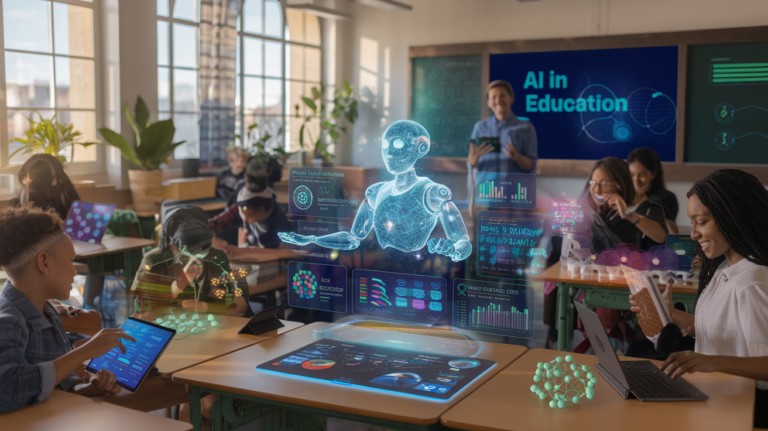
C. Immediate and Actionable Feedback: Instead of waiting days for a teacher to grade a test, students receive instant feedback on their work. The AI doesn’t just say “incorrect”; it explains why the answer is wrong and offers hints to guide the student toward the correct solution. This immediate feedback loop is crucial for effective learning and concept reinforcement.
D. Reduction in Student Anxiety: The fear of embarrassment in front of peers is a significant barrier to learning. AI tutors provide a safe, private environment where students can make mistakes without social repercussions. This encourages experimentation, curiosity, and a growth mindset, as students learn that struggle is an integral part of the learning process.
E. Empowerment of Educators: Far from making teachers obsolete, AI tutors empower them with superhuman capabilities. By handling routine grading, progress tracking, and foundational instruction, the AI frees up teachers’ time. This allows educators to focus on higher-impact activities: facilitating project-based learning, mentoring students emotionally and socially, and designing creative, engaging lesson plans that no AI could replicate.
C. Navigating the Challenges and Ethical Considerations
Despite the immense promise, the integration of AI tutors is not without its significant challenges. A thoughtful and critical approach is necessary to ensure this technology serves humanity equitably.
A. The Data Privacy Dilemma: AI tutors require vast amounts of sensitive data on children. Questions about who owns this data, how it is stored, and how it might be used (e.g., for commercial profiling) are paramount. Robust data protection laws and transparent policies from ed-tech companies are non-negotiable to protect students’ digital identities.
B. The Risk of Algorithmic Bias: AI models are trained on data created by humans, and this data can contain societal biases. An AI tutor trained primarily on data from one demographic could develop a teaching style or make assumptions that are ineffective or even harmful for students from different cultural or socioeconomic backgrounds. Continuous auditing for bias and diversifying training data is essential.
C. The Digital Divide: The promise of AI tutoring is meaningless for students without access to reliable internet and digital devices. Widespread adoption could exacerbate existing educational inequalities, creating a chasm between the AI-tutored haves and the have-nots. Public policy must address this infrastructure gap to prevent a new form of digital segregation.
D. The Over-Reliance and Diminished Human Interaction: Education is more than the transmission of facts; it’s about socialization, collaboration, and developing empathy. An over-reliance on AI could lead to isolated learning experiences and impoverish the vital student-teacher and student-student relationships that shape well-rounded individuals. The goal must be a balanced, hybrid model.
E. Limitations in Teaching “Soft Skills”: AI tutors excel at teaching structured, logical subjects like mathematics, coding, and languages. However, they struggle to teach critical thinking, creativity, ethical reasoning, and collaborative problem-solving in the same way a skilled human teacher can through dynamic classroom discussions and group projects.
D. The Future Trajectory: Where Do We Go From Here?
The current state of AI tutoring is merely the beginning. The future holds even more immersive and intuitive possibilities that will further blur the lines between digital and physical learning spaces.
A. The Rise of Multimodal and Emotion-Aware AI: Future AI tutors will not just process text. They will use computer vision and voice analysis to detect a student’s emotional state frustration, confusion, boredom, or engagement. If the system detects growing frustration, it could change its tone, offer a break, or present the concept in a completely different way, such as through a game or an interactive simulation.
B. Advanced Generative AI and Socratic Dialogue: Moving beyond pre-scripted responses, next-generation tutors powered by advanced generative models (like GPT-4 and beyond) will be able to generate entirely new explanations, examples, and practice problems on the fly. They will engage students in Socratic dialogues, asking probing questions that force students to think critically and defend their reasoning, thereby building deeper conceptual understanding.
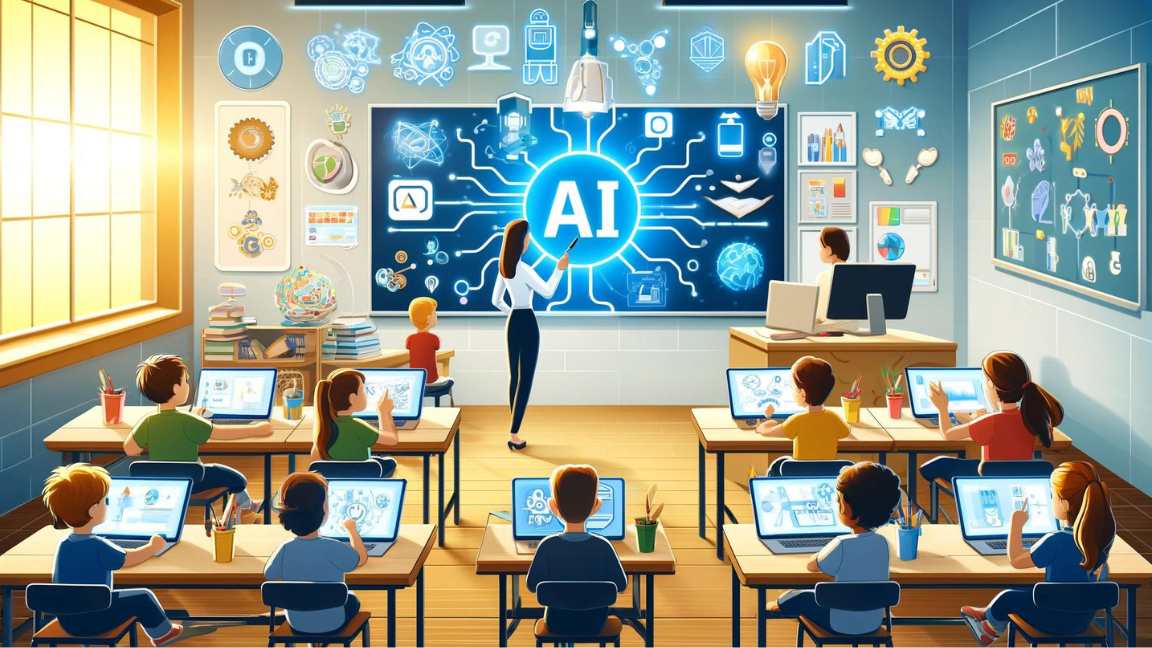
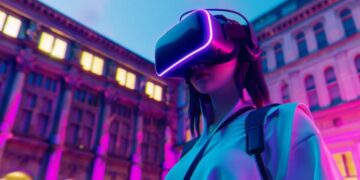
C. Seamless Integration with Augmented and Virtual Reality (AR/VR): Imagine an AI biology tutor guiding a student through a virtual dissection of a frog, pointing out organs and answering questions in real-time. Or a history tutor walking a student through a meticulously reconstructed ancient Rome. This fusion of AI with immersive technologies will make abstract concepts tangible and unforgettable.
D. Lifelong Learning Companions: The role of AI tutors will expand beyond K-12 and university education. They will become personalized lifelong learning companions for professionals seeking to upskill, retirees exploring new hobbies, and anyone with a thirst for knowledge, providing tailored guidance throughout an individual’s entire life.
Conclusion: A Symbiotic Future for Education
The revolution brought by AI tutors is not a tale of man versus machine, but one of partnership. The ideal classroom of the future will be a collaborative environment where the analytical power of AI works in harmony with the emotional intelligence and inspirational capacity of a human teacher. The AI handles the scalable, data-driven tasks of personalized practice and assessment, while the teacher cultivates curiosity, fosters a supportive community, and ignites the passion for learning that no algorithm can replicate. By thoughtfully embracing this technology, addressing its risks, and ensuring equitable access, we can move closer to the ultimate educational ideal: unlocking the unique potential of every single learner on the planet.