
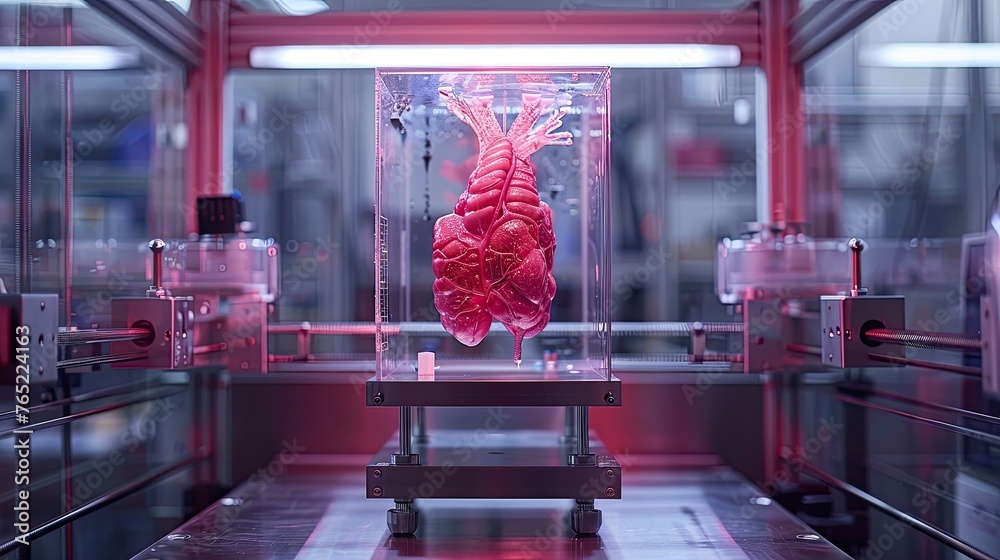
The human brain, a three-pound universe of intricate complexity, has long been the final frontier of scientific understanding. For centuries, the way we learn and process information has been constrained by our biological hardware. But what if we could engineer that hardware? What if we could create living, functional brain tissue in a lab to not only study neurological diseases but to fundamentally augment human cognition? This is not the plot of a science fiction novel; it is the burgeoning reality of cerebral bioprinting, a field poised to revolutionize our approach to learning, memory, and intellectual potential.
This comprehensive guide delves into the groundbreaking convergence of 3D bioprinting, neuroscience, and cognitive science. We will explore the intricate process of creating neural tissue, the transformative potential for supercharged learning, the formidable ethical and technical challenges, and the future where enhancing our minds could be as deliberate as upgrading software.
A. Deconstructing the Process: How to Bioprint a Mini-Brain
Bioprinting a functional brain structure, often referred to as a cerebral organoid or neural tissue construct, is a multi-stage, highly sophisticated procedure that goes far beyond simple 3D printing. It involves a delicate dance of biology, engineering, and computational design.
A. The Blueprint: Computational Modeling and Structural Design
Before a single cell is printed, scientists must create a digital blueprint. This involves using advanced imaging techniques like MRI and DTI (Diffusion Tensor Imaging) to map the brain’s intricate architecture, including the layered structure of the cerebral cortex, the connectivity of white matter tracts, and the vascular network. Computational models simulate how the printed tissue should develop and function, ensuring the final structure can support neural activity.
B. The Ink of Life: Bioink Formulation
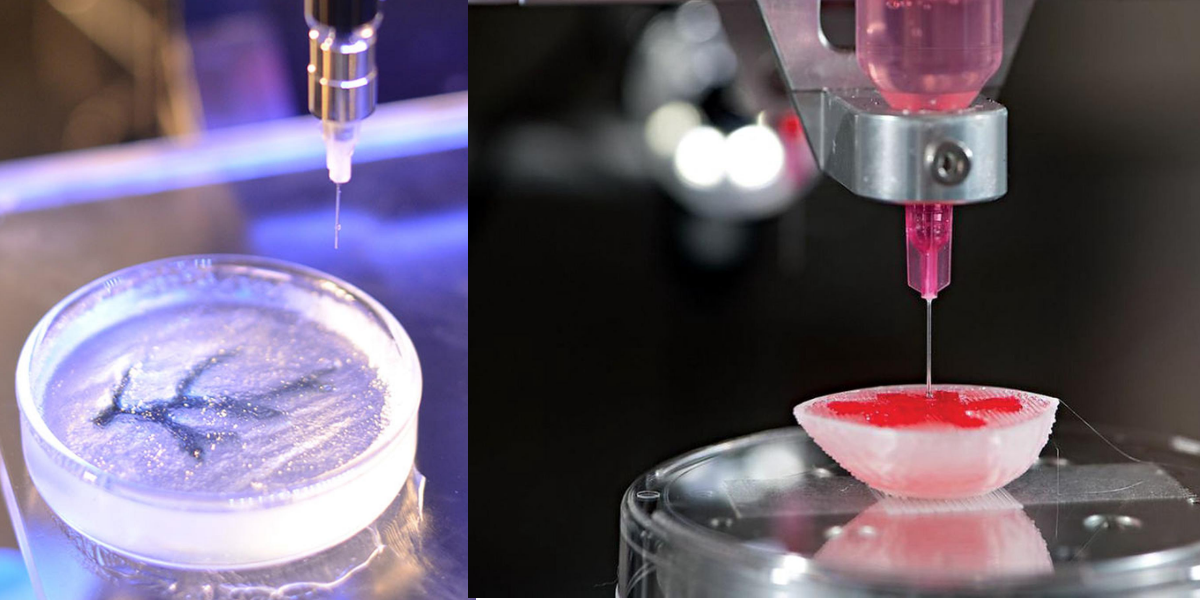
The core material of bioprinting is the “bioink.” This is not a simple polymer; it is a complex hydrogel infused with living components. A standard neural bioink consists of:
-
Hydrogel Scaffold: A biocompatible, often biodegradable, material that mimics the brain’s extracellular matrix (ECM). This gel provides structural support and crucial biochemical cues. Common materials include fibrin, hyaluronic acid, and specially engineered peptides.
-
Neural Progenitor Cells (NPCs): These are the “starter cells,” often derived from human induced pluripotent stem cells (iPSCs). NPCs have the potential to differentiate into all major cell types of the brain, including neurons, astrocytes, and oligodendrocytes.
-
Growth Factors and Signaling Molecules: To guide the cells’ development, the bioink is laden with a precise cocktail of proteins like BDNF (Brain-Derived Neurotrophic Factor) and NT-3 (Neurotrophin-3), which promote neuron survival, growth, and the formation of synapses.
C. The Act of Creation: The Bioprinting Techniques
Several advanced printing methods are employed to achieve the required precision:
-
Extrusion-Based Bioprinting: The most common method, where the bioink is dispensed continuously through a micro-nozzle to form a 3D structure layer-by-layer. It allows for high cell density but can subject cells to shear stress.
-
Inkjet Bioprinting: Similar to an office printer, this method deposits tiny, precise droplets of bioink. It is faster and gentler on cells but often results in lower structural integrity.
-
Laser-Assisted Bioprinting (LAB): A high-resolution technique using a laser pulse to vaporize a small portion of a ribbon, propelling a droplet of bioink onto a substrate. It offers excellent cell viability and precision but is more complex and expensive.
D. Maturation and Integration: The Post-Printing Phase
The printed structure is merely a scaffold with potential. It must then be placed in a bioreactor—a device that simulates the conditions of the human body by providing nutrients, oxygen, and mechanical stimulation (e.g., gentle rocking to mimic cerebrospinal fluid flow). Over weeks or months, the progenitor cells differentiate, migrate to their designated positions, extend axons and dendrites, and form functional synaptic connections, effectively “wiring up” the mini-brain.
B. The Cognitive Revolution: Applications in Enhanced Learning
The ability to create and interface with lab-grown neural tissue opens up unprecedented avenues for augmenting human learning and memory. This goes far beyond simple rote memorization, touching the very core of cognitive processing.
A. Personalized Neural Accelerators
Imagine a future where a student struggling with calculus could receive a bioprinted neural graft tailored to enhance their mathematical reasoning. By using their own iPSCs, scientists could create specialized neural networks optimized for specific cognitive tasks logic, spatial reasoning, or linguistic pattern recognition. These “cognitive co-processors” could be integrated with the brain, providing a dedicated hardware upgrade for challenging subjects.
B. Direct Skill and Knowledge Download
The concept of “uploading” knowledge, as seen in movies like The Matrix, may become a tangible reality. Researchers are already experimenting with encoding information into patterns of neural activity. A bioprinted neural interface could serve as a bridge, receiving pre-formatted data such as a new language’s grammar rules or the procedural memory for a complex physical skill like surgery and translating it into synaptic patterns that the host brain can integrate. Learning kung fu in seconds could transition from fiction to a disruptive educational technology.
C. Repairing and Enhancing Memory Pathways
The hippocampus is the brain’s central hub for memory formation. Degeneration or damage to this area leads to devastating conditions like Alzheimer’s. Bioprinted hippocampal tissue could be used to replace damaged regions, restoring the ability to form new memories. For healthy individuals, enhanced hippocampal grafts could lead to eidetic (photographic) memory or a significant increase in the speed and capacity of memory consolidation, turning anyone into a super-learner.
D. Advanced Neuroprosthetics and Brain-Computer Interfaces (BCIs)
Current BCIs, like those used to control robotic limbs, often interface with the brain using rigid electrodes. These can cause scarring and signal degradation over time. A bioprinted neural interface, being composed of living, soft tissue, could integrate seamlessly with the brain, creating a stable and high-bandwidth connection. This would not only restore function to paralyzed individuals but also allow for a fluid two-way exchange of information between the brain and external digital databases, effectively connecting human thought directly to the cloud.
C. Navigating the Labyrinth: Technical and Biological Hurdles
The path to bioprinting functional brains for learning is fraught with monumental scientific challenges. Acknowledging these hurdles is crucial to understanding the timeline and feasibility of this technology.
A. Achieving Structural and Functional Complexity
The human brain contains nearly 86 billion neurons connected by over 100 trillion synapses. Current bioprinted organoids are minuscule, simplistic, and lack the organized, multi-layered structure of a real brain. Reproducing the six-layered neocortex, the intricate circuitry of the thalamus, or the long-range connections between hemispheres remains a distant goal. Without this complexity, the tissue cannot support higher-order cognitive functions.
B. The Vascularization Imperative
Tissue larger than 0.2 millimeters requires a blood supply to deliver oxygen and nutrients and remove waste. Creating a functional, perfusable vascular network within a bioprinted brain is one of the field’s most significant obstacles. Without it, the inner cells of the organoid will necrotize and die, preventing the growth of large, sustainable tissue constructs.
C. Ensuring Correct Neural Circuitry
Simply having neurons in the right place is not enough; they must wire up correctly. Guiding axon pathfinding and ensuring the formation of appropriate excitatory and inhibitory synapses in a lab-grown tissue is an immense challenge. Incorrect wiring could lead to dysfunctional tissue or, worse, seizure-like activity (epileptogenesis).
D. The Consciousness and Sentience Conundrum
As these organoids become more complex, a profound ethical question arises: at what point do they become conscious? Could a sufficiently advanced bioprinted brain network experience sensation, pain, or self-awareness? Scientists have already detected organized electrical activity in some organoids. The lack of a definitive answer to what constitutes consciousness makes this a primary ethical frontier.
D. The Ethical Abyss: Moral and Societal Implications
The power to create and manipulate brain tissue forces us to confront ethical dilemmas that humanity has never before faced. Establishing a robust ethical framework is as important as the technological progress itself.
A. The Moral Status of Bioprinted Neural Tissue
Does a cerebral organoid have rights? Is it merely a clump of cells, or does it deserve a level of moral consideration? If it can feel pain or exhibit rudimentary signs of consciousness, its use in experiments becomes highly problematic. The debate over its “personhood” will define the regulations governing its creation and use.
B. The Specter of Neuro-Slavery and Exploitation
A dystopian application of this technology would be the creation of specialized biological “computers”—sentient neural networks grown for the sole purpose of processing data or controlling machinery, devoid of any rights or freedoms. This harrowing concept of “neuro-slavery” must be preemptively outlawed by the global community.
C. Exacerbating Socioeconomic Inequality
If neural enhancements become a commodity, they risk creating an unbridgeable chasm in society. The wealthy could afford to become smarter, faster, and more creative, securing the best opportunities and consolidating power, while the rest of society is left behind. This could lead to a new form of biological caste system, fundamentally challenging our notions of equality.
D. Identity and Autonomy in an Augmented Mind
If a significant part of your memory or cognitive capacity resides in a lab-grown graft, where does “you” end and the technology begin? Integrating external tissue could blur the lines of personal identity, raise questions about the authenticity of one’s thoughts, and create vulnerabilities (e.g., the potential for hacking or manipulating the bioprinted component).
E. The Road Ahead: Future Trajectories and Concluding Thoughts
Despite the challenges, the momentum behind cerebral bioprinting is undeniable. The future will likely unfold in stages:
-
Short-Term (Next 5-10 years): Advanced, vascularized organoids will become standard for drug testing and disease modeling, drastically reducing animal testing and accelerating pharmaceutical development for conditions like Parkinson’s and Alzheimer’s.
-
Mid-Term (10-25 years): The first successful integrations of bioprinted neural tissue for therapeutic purposes will occur, such as repairing stroke damage or spinal cord injuries. Early-stage cognitive enhancements for specific memory tasks may begin clinical trials.
-
Long-Term (25+ years): If the ethical and technical hurdles are overcome, we may see the emergence of customizable cognitive modules and seamless high-bandwidth BCIs, fundamentally transforming education, work, and the very nature of human experience.
In conclusion, bioprinting cerebral tissue for enhanced learning represents a paradigm shift of existential proportions. It promises a future free from the shackles of neurological disease and the slow, inefficient process of traditional learning. However, this power carries with it a profound responsibility. The journey ahead is not merely a scientific one; it is a philosophical, ethical, and societal expedition. As we stand on the precipice of being able to redesign our own minds, we must proceed with not only ingenuity and ambition but also with wisdom, caution, and an unwavering commitment to the collective good of humanity. The question is no longer if we can engineer intelligence, but what kind of intelligent future we choose to build.