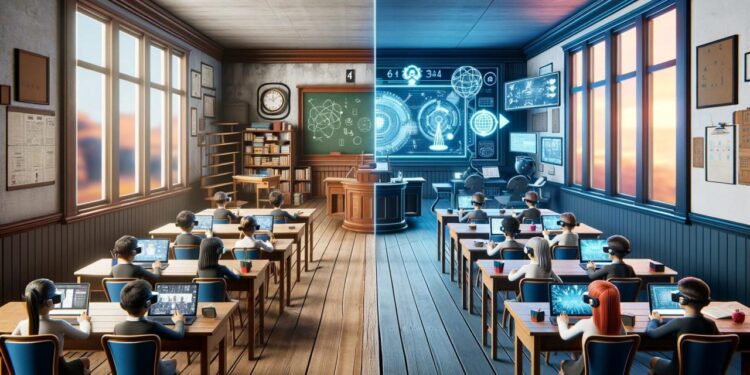

In an era where digital natives populate our classrooms, the traditional chalk-and-talk method of instruction often struggles to capture and retain student attention. The constant pull of instant gratification from video games, social media, and streaming platforms has created a significant engagement gap in education. Bridging this chasm requires an innovative approach that speaks the language of the modern learner. Enter gamification—a powerful pedagogical strategy that is fundamentally reshaping the educational landscape by infusing learning dynamics with the compelling elements of game design. This transformative approach goes far beyond mere points and badges; it is a sophisticated methodology for boosting motivation, deepening comprehension, and fostering a lifelong love for learning.
A. Deconstructing Gamification: It’s More Than Just Games
Before delving into its applications, it is crucial to distinguish between “gamification” and “game-based learning.” They are related but distinct concepts.
-
Game-Based Learning (GBL) involves using actual games to teach specific skills or knowledge. Think of using Minecraft: Education Edition to explore city planning or playing SimCity to understand resource management. The game itself is the primary vehicle for learning.
-
Gamification, on the other hand, involves applying game-design elements and principles in non-game contexts. It does not necessarily involve playing a full-fledged game. Instead, it integrates mechanics like point systems, leaderboards, challenges, and storylines into the standard curriculum. Turning a history unit into a “quest” to uncover secrets of the past or a math class into a “leveling up” system where students “defeat” algebra problems are examples of gamification.
At its core, gamification taps into fundamental human psychology. It leverages our innate desires for mastery, autonomy, purpose, and social connection. By satisfying these drives, it creates a learning environment where students are not just passive recipients of information but active participants in their own educational journey.
B. The Core Mechanics: The Building Blocks of Educational Gamification
Successful gamification is not a random assortment of game-like features. It is a carefully crafted system built upon several key mechanics that work in concert to drive engagement.
A. Points, Badges, and Leaderboards (PBLs): The Foundational Trio
While often considered the basic level of gamification, when used thoughtfully, PBLs are highly effective.
-
Points: These provide immediate feedback and a quantifiable measure of progress. They can be awarded for completing tasks, accuracy, creativity, or even helping peers. Points act as a constant reinforcement mechanism.
-
Badges: These function as visual representations of achievements and mastered skills. They tap into our desire for collection and status. A badge for “Master Debater” in a language arts class or “Quantum Physicist” for completing a physics module serves as a tangible, shareable symbol of accomplishment.
-
Leaderboards: These introduce a healthy element of competition and social comparison. However, they must be implemented with care to avoid discouraging lower-performing students. Best practices include using segmented leaderboards (e.g., by team or weekly performance) or “anti-leaderboards” that highlight most improved players to foster a growth mindset.
B. Progression and Leveling Up: The Power of the Journey
This mechanic visualizes the learning journey. Instead of a nebulous path towards a final grade, students see a clear map.
-
Visual Progress Bars: A simple bar that fills up as assignments are completed provides a powerful visual cue of advancement.
-
Unlocking Levels: The curriculum can be structured into levels (e.g., “Novice,” “Apprentice,” “Adept,” “Master”). Completing one level unlocks the next, creating a sense of sequential achievement and making the learning path feel like an adventure rather than a chore.

C. Meaningful Storylines and Quests: The Context for Learning
Embedding lessons within a narrative framework transforms abstract concepts into compelling missions. Instead of “complete worksheet 4B,” a task becomes “decipher the ancient runes to unlock the tomb of the Pharaoh and discover the secret of the pyramids.” This narrative context provides purpose and makes the content memorable. A science chapter on ecology can become a “Save the Planet” campaign where students complete quests to solve environmental crises.
D. Immediate Feedback and Recovery: Failing Forward
In traditional settings, failure is often punitive a red mark on a paper. In games, failure is a learning opportunity. Gamification introduces this “fail-forward” mechanic. When a student fails a quiz or gets an answer wrong, the system can provide instant, constructive feedback and allow them to try again without severe penalty. This reduces the fear of failure and encourages experimentation and resilience.
E. Collaboration and Social Dynamics: The Guild Mentality
Many games thrive on social interaction, and educational gamification can harness this power. Creating “clans,” “guilds,” or “alliances” where students must work together to solve complex problems or compete against other groups fosters teamwork, communication, and peer-to-peer teaching. A class-wide challenge to collectively read 1,000 pages or solve a grand mystery encourages a collaborative classroom culture.
C. The Tangible Impact: Quantifying the Benefits of Gamification
The theoretical appeal of gamification is backed by a growing body of evidence showcasing its profound impact on educational outcomes.
A. A Surge in Motivation and Engagement
This is the most immediate and noticeable benefit. The dopamine-driven reward systems inherent in gamification make learning addictive in the best sense. Students who were once disengaged find themselves eager to “complete just one more quest” or “earn one more badge,” leading to increased time-on-task and a more vibrant classroom atmosphere.
B. Cultivating a Deeper, More Enduring Understanding
Gamification promotes active learning. To progress, students must constantly apply knowledge, make decisions, and solve problems. This process moves information from short-term memory into long-term retention. Furthermore, by framing complex topics within a story or a series of challenges, students can form stronger mental connections to the material, leading to a more profound and nuanced understanding.
C. Fostering a Growth Mindset and Resilience
The “leveling up” system and the ability to learn from failure without permanent consequences teach students that ability is not fixed. It reinforces that intelligence and skill can be developed through effort and persistence. When a student fails a challenge but is encouraged to try a different strategy, they internalize the value of perseverance, a critical life skill.
D. Enhancing Critical 21st-Century Skills
Well-designed gamified environments are breeding grounds for skills like problem-solving, critical thinking, collaboration, and creativity. Students aren’t just memorizing facts; they are analyzing situations, strategizing, working in teams, and thinking outside the box to overcome obstacles. These are precisely the competencies demanded by the modern workforce.
E. Providing Actionable Data for Personalized Learning
Digital gamification platforms generate a wealth of data on student performance. Educators can see not just who passed or failed, but how they are learning where they are stuck, what strategies they are using, and how long they are taking. This data allows for unprecedented levels of personalization, enabling teachers to provide targeted support and challenges tailored to each student’s unique learning path.
D. From Theory to Practice: Actionable Gamification Strategies for Modern Classrooms
Implementing gamification does not require a complete overhaul of the curriculum. Educators can start with these practical, scalable strategies.
A. The Class-Wide Epic Narrative
Transform an entire semester or unit into a grand story. For a literature class studying The Odyssey, the classroom becomes the ancient Mediterranean. Students are “sailors” on a journey, forming “crews.” Each lesson is a new island with its own challenges (Scylla and Charybdis become logic puzzles; the Cyclops’ cave becomes a reading comprehension challenge). Earning “favor from the gods” (points) allows them to upgrade their “ship” or gain special abilities.
B. The Quest-Based Learning Management System (LMS)
Restructure your digital classroom (like Google Classroom, Moodle, or Canvas) to reflect a gamified structure. Instead of a list of assignments, create a “Quest Board.” Each quest has a clear objective, a list of “resources” (learning materials), and a “reward” (points, a badge). Students can choose quests in a non-linear fashion, granting them autonomy over their learning path.
C. The Mastery Badge System
Replace or supplement the traditional grading system with a digital badge framework. Create a hierarchy of badges for different skills and knowledge areas. For example, in a coding class, badges could include “HTML Novice,” “CSS Stylist,” “JavaScript Animator,” and ultimately “Full-Stack Developer.” This provides a more granular and motivating view of achievement than a single letter grade.
D. The Collaborative World-Building Project
In a history or social studies class, task student groups with building and managing a civilization throughout a semester. They must make decisions about resource allocation, governance, and foreign policy, facing historical events and random “crises.” Their choices have consequences, which are tracked on a class “world map.” This long-term project fosters deep research, negotiation, and systems thinking.
E. Navigating the Pitfalls: Challenges and Considerations for Effective Implementation
While powerful, gamification is not a magic bullet. Missteps can lead to disengagement or even counterproductive outcomes.
A. The Over-Emphasis on Extrinsic Rewards
A significant risk is creating a system where students only work for points or badges, undermining their intrinsic motivation to learn. The key is to use extrinsic rewards as a bridge to intrinsic motivation. As students engage, the inherent interest and satisfaction of the subject matter should become the primary driver. Rewards should celebrate learning, not replace it.
B. Ensuring Equity and Avoiding Demotivation
Competitive elements like leaderboards can be demoralizing for students who consistently find themselves at the bottom. The focus must be on growth and mastery, not just performance. Implement systems that reward effort, improvement, and collaboration. Offer multiple paths to success so that every student can experience winning.

C. The Danger of Oversimplification
Complex subjects cannot always be broken down into simple “win/lose” scenarios. Gamification must be designed to honor the complexity of the content. The challenges should require critical thought, not just rote memorization. The “game” should be a vessel for depth, not a replacement for it.
D. The Investment of Time and Resources
Designing a robust, compelling gamified system requires significant upfront planning from educators. It demands creativity, a deep understanding of game mechanics, and often, familiarity with new technologies. Schools must be prepared to invest in professional development and provide teachers with the time and tools needed to succeed.
F. The Future of Gamified Learning: An Evolving Educational Paradigm
The trajectory of gamification points towards even more immersive and personalized experiences. The integration of emerging technologies like Virtual Reality (VR) and Augmented Reality (AR) will allow students to not just read about ancient Rome but to walk its streets in a gamified historical simulation. Artificial Intelligence (AI) will enable dynamic gamification, where the challenges, narrative, and rewards adapt in real-time to a student’s emotional state and performance, creating a truly personalized learning adventure.
In conclusion, gamification in education represents a paradigm shift from a passive, standardized model to an active, student-centered one. It is a sophisticated tool that, when implemented with care and pedagogical purpose, has the proven potential to unlock unprecedented levels of student engagement, foster essential skills, and cultivate a generation of resilient, lifelong learners. By speaking the native language of the 21st-century student, it doesn’t just make learning more fun it makes it more meaningful, memorable, and effective.