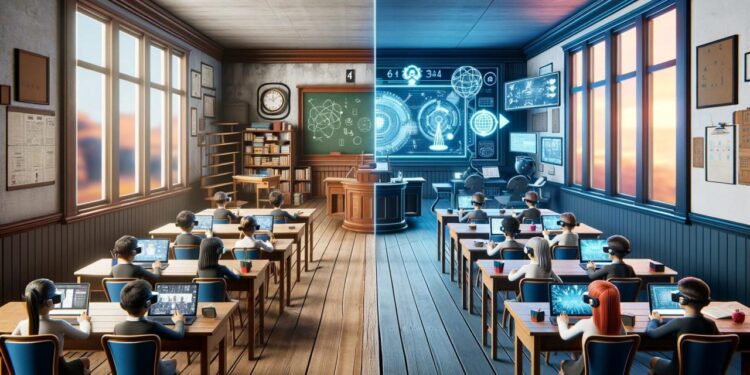
For centuries, the fundamental model of education has remained strikingly consistent: a teacher at the front of a room, students at desks, and knowledge conveyed through textbooks, lectures, and static images. While this model has its merits, it often struggles to captivate the digital-native generation and fails to provide experiential depth for complex subjects. Enter Virtual Reality (VR), a technology once confined to the realms of science fiction and gaming, now poised to shatter the traditional classroom walls and redefine the very essence of learning. The integration of VR classrooms is not merely an upgrade; it is a pedagogical revolution, transporting students from passive recipients of information to active participants in their own educational journeys. This transformation promises to enhance engagement, democratize access, and cultivate skills essential for the 21st century.
The concept of immersive learning is not entirely new. From the dioramas of ancient times to the educational films of the 20th century, educators have always sought ways to make learning more tangible. However, VR represents the ultimate culmination of this quest. By donning a headset, a student is no longer just reading about ancient Rome; they are walking through the Roman Forum, hearing the chatter of the crowds and looking up at the towering temples. This level of immersion triggers a profound cognitive and emotional connection to the subject matter, moving learning from abstract to concrete.
A. The Multifaceted Advantages of VR in Modern Education
The benefits of incorporating VR into educational frameworks are extensive and well-documented. They extend far beyond the initial “wow” factor, impacting core educational outcomes and student development.
A. Unprecedented Engagement and Immersion
The human brain is wired to remember experiences far more effectively than it recalls text or lectures. VR capitalizes on this by creating a sense of “presence” – the undeniable feeling of being in a different place. This captivates students’ attention in a way that a textbook simply cannot. A student studying marine biology can embark on a deep-sea dive to explore a coral reef, surrounded by shimmering schools of fish and majestic whales. This emotional resonance and sensory-rich experience transform learning from a chore into an adventure, significantly boosting motivation and reducing absenteeism.
B. Mastering Complex Concepts Through Experience
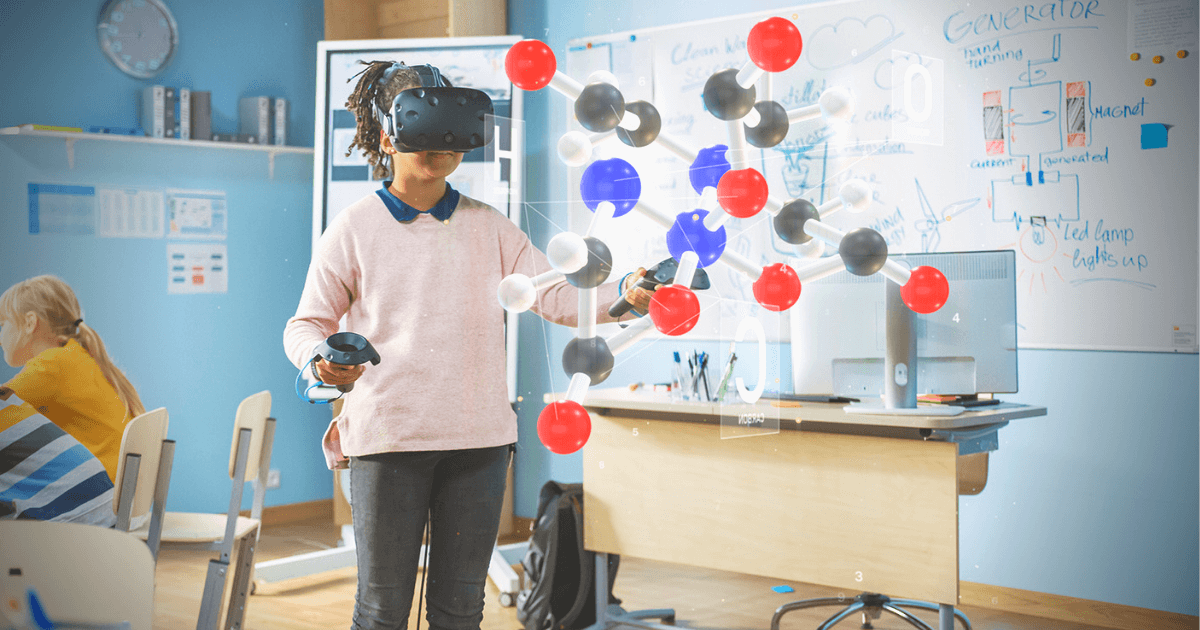
Abstract concepts in science, technology, engineering, and mathematics (STEM) often present the greatest learning hurdles. How does one truly visualize a DNA helix or the vast scale of our solar system? VR makes the intangible tangible. Students can manipulate 3D models of molecules, watching bonds form and break. They can shrink down to the size of a blood cell and travel through the human circulatory system, or stand on the surface of Mars and witness the planet’s geography firsthand. This experiential learning leads to a deeper, more intuitive understanding that is difficult to achieve through traditional methods.
C. The Ultimate Safe Practice Environment
In fields where mistakes can have real-world consequences, VR offers a risk-free sandbox for experimentation. Medical students can perform intricate surgical procedures on virtual patients, allowing them to hone their skills and learn from errors without any risk to human life. Aspiring pilots can navigate through treacherous weather conditions in a flight simulator. Chemistry students can combine volatile elements to see the reactions without the danger of an explosion. This safe-to-fail environment encourages exploration, builds confidence, and accelerates the mastery of high-stakes skills.
D. Fostering Empathy and Global Citizenship
Perhaps one of the most profound applications of VR is its ability to foster empathy and cultural understanding. By virtually stepping into the shoes of another person, students can experience perspectives far removed from their own. They can walk through a refugee camp, experience a day in the life of a historical figure, or see the world through the eyes of someone with a disability. These powerful narrative experiences break down prejudices and build a foundational sense of global citizenship and social responsibility, teaching lessons in humanity that are as crucial as any academic subject.
E. Championing Accessibility and Inclusive Education
VR has the potential to be a great equalizer in education. For students with physical disabilities or those who are homebound, VR can provide access to experiences and field trips that would otherwise be impossible. It can also offer customized learning pathways for students with different learning styles and needs. For example, a student with dyslexia might benefit from a VR history lesson that is primarily auditory and visual, while a student on the autism spectrum might practice social interactions in a controlled, virtual environment. This personalized approach ensures that education is more inclusive and equitable.
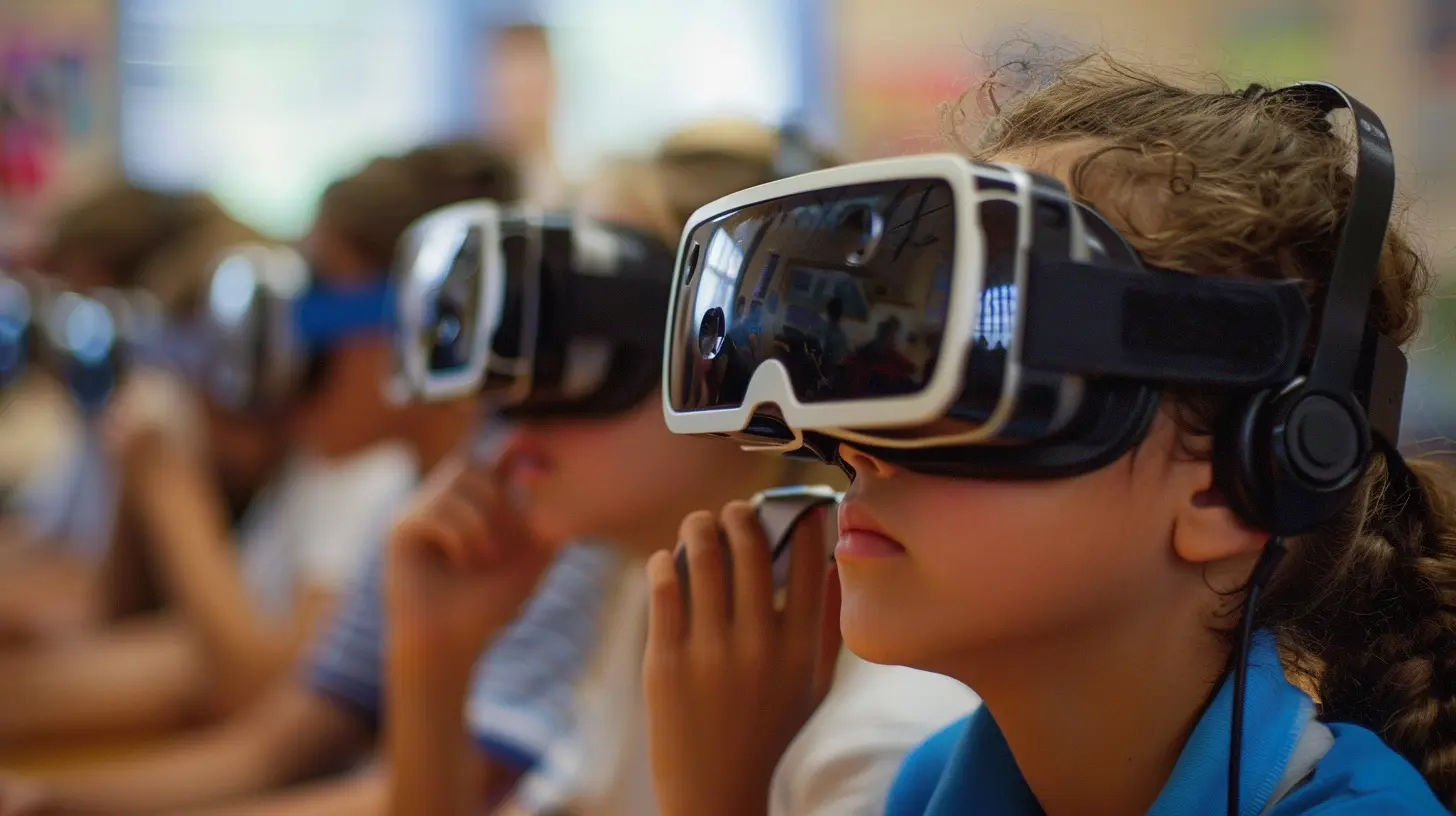
B. Implementing VR in the Educational Ecosystem: A Practical Guide
Adopting VR technology requires careful planning and strategic implementation. It is not about replacing teachers, but about empowering them with a powerful new tool.
A. Choosing the Right Hardware and Software
The first step is selecting the appropriate VR equipment. Options range from affordable smartphone-based headsets like Google Cardboard, which offer a basic introductory experience, to more advanced standalone headsets like the Meta Quest 3, which provide greater interactivity and freedom of movement. For the highest-fidelity experiences, PC-tethered systems like the Valve Index are available but come at a higher cost. The choice of software is equally critical. Educators should seek out curriculum-aligned VR applications that have clear learning objectives, not just technological gimmicks. Platforms like Google Expeditions and ENGAGE offer vast libraries of educational content.
B. Seamless Curriculum Integration
For VR to be effective, it must be thoughtfully integrated into the existing curriculum, not used as an isolated novelty. It should serve as a tool to enhance specific learning objectives. For instance, a unit on Shakespeare’s Romeo and Juliet could culminate in a VR experience where students explore a reconstruction of Verona and watch key scenes unfold around them. A geography lesson on volcanoes becomes unforgettable when students can virtually stand on the rim of an active volcano. This requires collaboration between instructional designers, subject matter experts, and teachers to create meaningful lesson plans that leverage VR’s unique strengths.
C. Essential Teacher Training and Support
The success of any new educational technology hinges on the teachers who implement it. Educators need comprehensive training not only on how to operate the hardware and software but, more importantly, on how to facilitate a VR lesson. This includes guiding students before the experience, managing the classroom during the VR session, and leading a reflective debriefing afterward to solidify learning. Without proper professional development, even the most advanced VR system risks being underutilized or misused.
D. Addressing Cost and Logistical Hurdles
The initial investment for a classroom VR setup can be significant. Beyond the headsets themselves, schools must consider costs for software licenses, powerful enough computers to run them, storage solutions, and ongoing maintenance. Creative funding solutions, such as grants, community partnerships, and phased roll-out plans, are often necessary. Furthermore, logistical challenges like managing headset hygiene, ensuring physical space for safe use, and scheduling access across multiple classes must be proactively addressed.
C. Navigating the Challenges and Ethical Considerations
As with any transformative technology, the path forward with VR is not without its obstacles and ethical dilemmas that require careful consideration.
A. The Financial Barrier to Entry
The high cost of quality VR equipment remains one of the most significant barriers to widespread adoption. This can exacerbate the digital divide, creating a scenario where only well-funded schools can offer these immersive experiences, leaving disadvantaged students further behind. A concerted effort from policymakers, tech companies, and educational institutions is needed to develop sustainable models and subsidized programs to ensure equitable access.
B. Physiological Effects: Cybersickness and Eye Strain
Prolonged use of VR can cause cybersickness a type of motion sickness characterized by dizziness, nausea, and eye strain in some users. The long-term effects of VR on children’s developing visual systems are also still being studied. It is imperative for educators to enforce strict time limits, encourage frequent breaks, and be vigilant for any signs of discomfort among students.
C. Data Privacy and Security in Immersive Worlds
VR systems collect a vast amount of biometric and behavioral data, including eye tracking, movement patterns, and even vocal inflections. This raises serious questions about student data privacy. Who owns this data? How is it being used and stored? Schools and technology providers must establish transparent, robust data security protocols and ensure compliance with regulations like FERPA (Family Educational Rights and Privacy Act) to protect students in these new digital frontiers.
D. The Risk of Escapism and Social Isolation
While VR can connect students to global communities, there is a concurrent risk that overuse could lead to social isolation in the physical world. Balancing immersive virtual experiences with real-world social interaction, collaborative projects, and physical activity is crucial. The goal of educational VR should be to enhance reality, not replace it.
E. Ensuring Content Quality and Pedagogical Soundness
The VR educational content market is rapidly expanding, but not all of it is created equal. There is a risk of “edutainment” where flashy visuals overshadow solid pedagogical foundations. Educators must act as curators, critically evaluating VR content to ensure it is accurate, age-appropriate, and aligns with clear educational standards and learning outcomes.
D. The Future Horizon: What’s Next for VR in Education?
The current state of VR in education is just the beginning. Several emerging technologies are set to deepen and expand its impact.
A. The Synergy of VR and Artificial Intelligence (AI)
The integration of AI with VR will create truly intelligent tutoring systems. An AI-powered VR environment could adapt in real-time to a student’s performance, offering personalized hints, posing more challenging questions, or altering the scenario based on their understanding. An AI-driven virtual character could serve as a personal tutor, capable of understanding and responding to a student’s questions in natural language.
B. The Rise of Social VR and Collaborative Learning
The future of VR classrooms is inherently social. Platforms are evolving to allow students from different parts of the world to meet and collaborate in a shared virtual space. They could work together to solve a complex engineering problem, conduct a virtual science experiment as a team, or create art in a 3D environment. This fosters collaboration and communication skills on a global scale.
C. Haptic Feedback and Multi-Sensory Immersion
Current VR is primarily a visual and auditory experience. The next leap will come with the widespread adoption of haptic technology gloves and suits that provide tactile feedback. Imagine a geology student being able to feel the texture of different rock formations or a medical student feeling the resistance of virtual tissue during surgery. This multi-sensory input will make virtual experiences nearly indistinguishable from real ones, further enhancing the learning process.
D. The Expansion of the Metaverse in Education
The concept of the “Metaverse” a persistent, shared, and interconnected virtual universe holds immense potential for education. Instead of isolated VR field trips, students could attend a persistent virtual school campus, complete with a library, science labs, and lecture halls, interacting with peers and instructors in a sustained digital world that complements their physical education.
In conclusion, the advent of virtual reality classrooms marks a pivotal moment in the history of education. It is a shift from a passive, one-size-fits-all model to an active, personalized, and deeply experiential paradigm. While challenges related to cost, access, and health must be thoughtfully navigated, the potential benefits for student engagement, comprehension, and skill development are too significant to ignore. VR is not a magic bullet, but a powerful instrument. In the hands of skilled educators, it has the potential to unlock human potential in ways we are only beginning to imagine, preparing a generation of learners not just to read about the world, but to experience, understand, and ultimately, to change it.