The world stands at a critical juncture, facing a silent yet devastating emergency that threatens to unravel decades of human progress: the global education crisis. While the COVID-19 pandemic acted as a brutal accelerant, exposing and exacerbating profound weaknesses, the roots of this crisis run much deeper. What we are witnessing is not a temporary disruption but a systemic failure that is deepening pre-existing inequalities and creating a generation of learners at risk. This analysis moves beyond the headlines to dissect the multifaceted nature of this crisis, exploring its primary drivers, its devastating and often hidden consequences, and proposing a comprehensive, actionable framework for building a more resilient, equitable, and effective global education system for the future.
The notion of a “learning crisis” was part of the global discourse long before 2020. For years, organizations like the World Bank and UNESCO had been sounding the alarm about “learning poverty”—the inability to read and understand a simple text by age 10. In 2019, over 50% of children in low- and middle-income countries were living in learning poverty. The pandemic did not create this problem; it poured gasoline on a smoldering fire. School closures, which at their peak affected over 1.6 billion students worldwide, transformed a chronic issue into an acute catastrophe, laying bare the digital chasms, economic fragility, and institutional weaknesses that have plagued education systems for generations.
A. The Multifaceted Drivers of the Educational Collapse
To effectively address the crisis, we must first understand its complex and interconnected causes. It is a tapestry woven from threads of technological disparity, economic pressure, and systemic insufficiency.
A. The Gaping Chasm of the Digital Divide
The rapid shift to remote learning during lockdowns was a privilege, not a universal reality. The digital divide became the new face of educational inequality. This divide manifests in three critical layers:
-
Access to Connectivity: Millions of children, particularly in rural and impoverished communities, live in households without reliable internet access or even electricity. Online learning was simply not an option.
-
Availability of Devices: Even in homes with internet, the lack of a dedicated device a laptop, tablet, or even a smartphone proved a significant barrier. It was common for multiple children to share a single phone, severely limiting their learning time.
-
Digital Literacy: Access to technology is meaningless without the skills to use it effectively. Many students, parents, and even teachers were thrust into a digital learning environment without the necessary training or support, leading to frustration and disengagement.
B. The Socio-Economic Squeeze on Learners and Families
Education does not exist in a vacuum; it is deeply intertwined with a family’s economic well-being. The pandemic-induced economic downturn had a catastrophic knock-on effect on education.
-
The Shadow Pandemic of Child Labor and Early Marriage: With schools closed and family incomes shattered, many children were pushed into the labor market to help their families survive. For adolescent girls, the risk of early and forced marriage increased significantly, permanently ending their educational journeys.
-
The School as a Lifeline: For countless children, especially in vulnerable communities, school is more than a place of learning. It is a source of nutrition through school meal programs, a safe haven from violence or instability, and a center for psychosocial support. The closure of schools severed this vital lifeline, with dire consequences for child welfare.
C. Systemic Weaknesses and Pre-existing Conditions
The pandemic acted as a stress test for national education systems, and many were found to be critically weak. These systemic failures predated the virus.
-
Chronic Underfunding: Many governments, particularly in developing nations, have chronically underinvested in education. This results in overcrowded classrooms, a lack of basic learning materials, and inadequate school infrastructure.
-
The Global Teacher Shortage and Support Deficit: The world is facing a massive shortage of qualified teachers. Furthermore, those in the profession are often underpaid, overworked, and lack access to continuous professional development, leaving them unprepared for the challenges of modern education, let alone a global pandemic.
-
Outdated and Inflexible Curricula: In many parts of the world, the curriculum has not evolved to meet the demands of the 21st century. It often prioritizes rote memorization over critical thinking, creativity, and socio-emotional skills, making learning less relevant and engaging for students.
B. The Profound and Intergenerational Consequences
The impact of the education crisis extends far beyond missed school days. It is creating a ripple effect that will be felt for decades, stunting economic growth and deepening social fractures.
A. The Catastrophic Rise in Learning Poverty
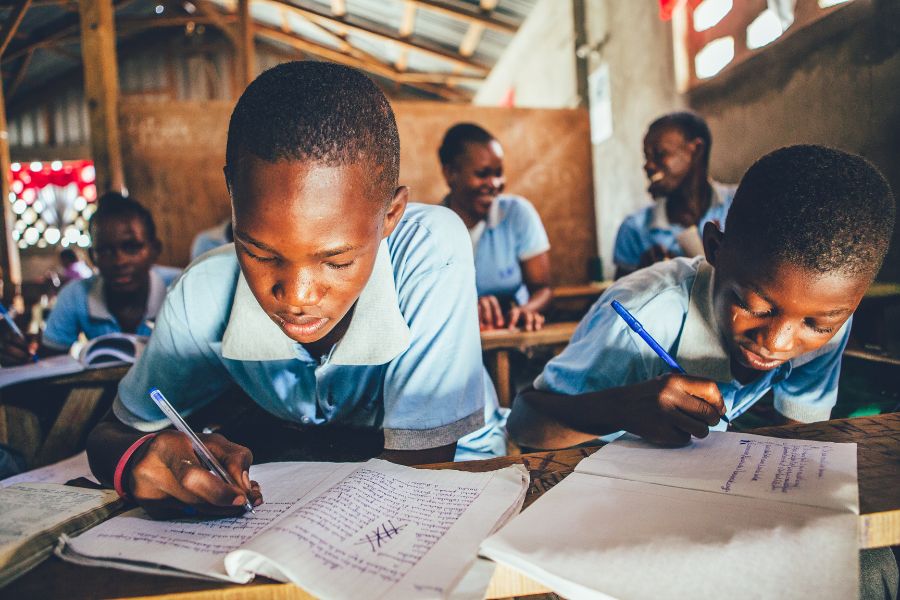
The most direct impact is on learning outcomes. Current estimates suggest that the learning losses have been staggering. In some regions, students have lost the equivalent of over a year of schooling. This has dramatically increased the percentage of children in learning poverty, with some studies suggesting it could affect up to 70% of children in low- and middle-income countries. A child who cannot read cannot learn other subjects, setting them on a lifelong path of limited opportunity.
B. The Accelerated Widening of Inequality
The crisis has acted as a great inequality amplifier. The learning losses have been disproportionately borne by the most marginalized: children from low-income families, rural areas, girls, refugees, and children with disabilities. Those with resources private tutors, quiet homes, reliable internet were able to mitigate the damage, while those without fell further behind. This is creating a “COVID generation” with a vastly divergent range of skills and opportunities, threatening to cement social hierarchies for years to come.
C. The Silent Crisis of Mental Health and Wellbeing
The isolation, uncertainty, and stress of the pandemic have taken a severe toll on the mental health of both students and educators. Anxiety, depression, and feelings of loneliness have become widespread. The loss of routine, social interaction, and the pressure of adapting to new learning modes have created a psychological scar that will require dedicated, long-term attention. Ignoring this mental health crisis will undermine any academic recovery efforts.
D. The Long-Term Economic Scarring
Education is the bedrock of economic development and individual earning potential. The World Bank estimates that this generation of students stands to lose up to $17 trillion in lifetime earnings due to the learning losses incurred during the pandemic. This represents a massive blow to future economic productivity, innovation, and global GDP. A less-educated workforce is less adaptable to technological change, attracting less investment and perpetuating cycles of poverty.
C. A Blueprint for Building a Resilient Educational Future
Addressing a crisis of this magnitude requires more than just reopening schools. It demands a fundamental reimagining of education systems, backed by political will and significant investment. The following framework outlines a path forward.
A. Reimagining and Modernizing the Educational Foundation
We cannot simply return to the pre-pandemic “normal,” as that normal was already failing millions. Transformation is essential.
-
Curriculum Overhaul: Curricula must be modernized to focus on “21st-century skills” such as critical thinking, problem-solving, collaboration, creativity, and digital literacy. This also includes integrating socio-emotional learning (SEL) to help students manage emotions, build resilience, and develop empathy.
-
Formative and Adaptive Assessment: Moving away from high-stakes exams that promote rote learning towards continuous, formative assessments that provide real-time data on student understanding and allow teachers to tailor their instruction accordingly.
B. Leveraging Technology as a Tool for Equity, Not Division
Technology must be harnessed to bridge gaps, not widen them. This requires a concerted effort on multiple fronts.
-
Infrastructure as a Public Utility: Governments and private sector partners must treat digital access as a essential public utility, investing in infrastructure to bring affordable, reliable internet to the most remote and underserved communities.
-
Developing Inclusive Digital Learning Platforms: Investment is needed in creating high-quality, engaging, and locally relevant digital learning content that can function even in low-bandwidth environments. This content should be accessible on multiple devices, including basic smartphones.
-
Blended Learning Models: The future of education lies in effective blended learning a thoughtful combination of in-person instruction and online learning. This model can offer greater flexibility and personalization, making education more resilient to future disruptions.
C. Empowering the Architects of Education: Teachers
No education system can exceed the quality of its teachers. Supporting the teaching profession is non-negotiable.
-
Investment in Training and Professional Development: Teachers need ongoing, high-quality training not only on new technologies and pedagogical methods but also on trauma-informed practices and identifying students in mental distress.
-
Improving Status and Compensation: To attract and retain the best talent, teaching must be recognized as a valued profession with competitive salaries, decent working conditions, and opportunities for career advancement.
D. Prioritizing Holistic Student Wellbeing
Schools must be redesigned to support the whole child. This means:
-
Integrating Psychosocial Support: Making school counselors, psychologists, and social workers a standard feature of the educational environment.
-
Reinforcing Schools as Community Hubs: Strengthening the role of schools in providing nutrition, healthcare referrals, and safe spaces for children, ensuring they are supported beyond their academic needs.

E. Mobilizing Political Will and Financial Resources
Ultimately, all these solutions require funding and political commitment.
-
Domestic Financing: Governments must prioritize education in national budgets, protecting and increasing domestic financing even in times of economic hardship.
-
International Aid and Debt Relief: The international community must step up, providing increased aid to education and considering debt relief for low-income countries so they can redirect resources towards rebuilding their education systems.
-
Achieving the Sustainable Development Goal 4 (SDG4): This global commitment to “ensure inclusive and equitable quality education and promote lifelong learning opportunities for all” must be the guiding star for all recovery efforts, holding governments accountable for their promises.
Conclusion: A Crossroads of Crisis and Opportunity
The global education crisis is one of the defining challenges of our time. It is a complex problem with no single, simple solution. The depth of the crisis is undeniable it has stolen learning, dimmed potential, and threatened the futures of an entire generation. However, within this profound challenge lies a historic opportunity. We have been given a stark warning and a clear mandate to fix what was broken. By moving beyond short-term fixes and embracing a bold, holistic, and generously funded transformation, we can build education systems that are not only more resilient to future shocks but are also more inclusive, effective, and empowering for every child, everywhere. The cost of inaction is far greater than the investment required. The time to act is now, for the future of our children and the stability of our world depends on the choices we make today.