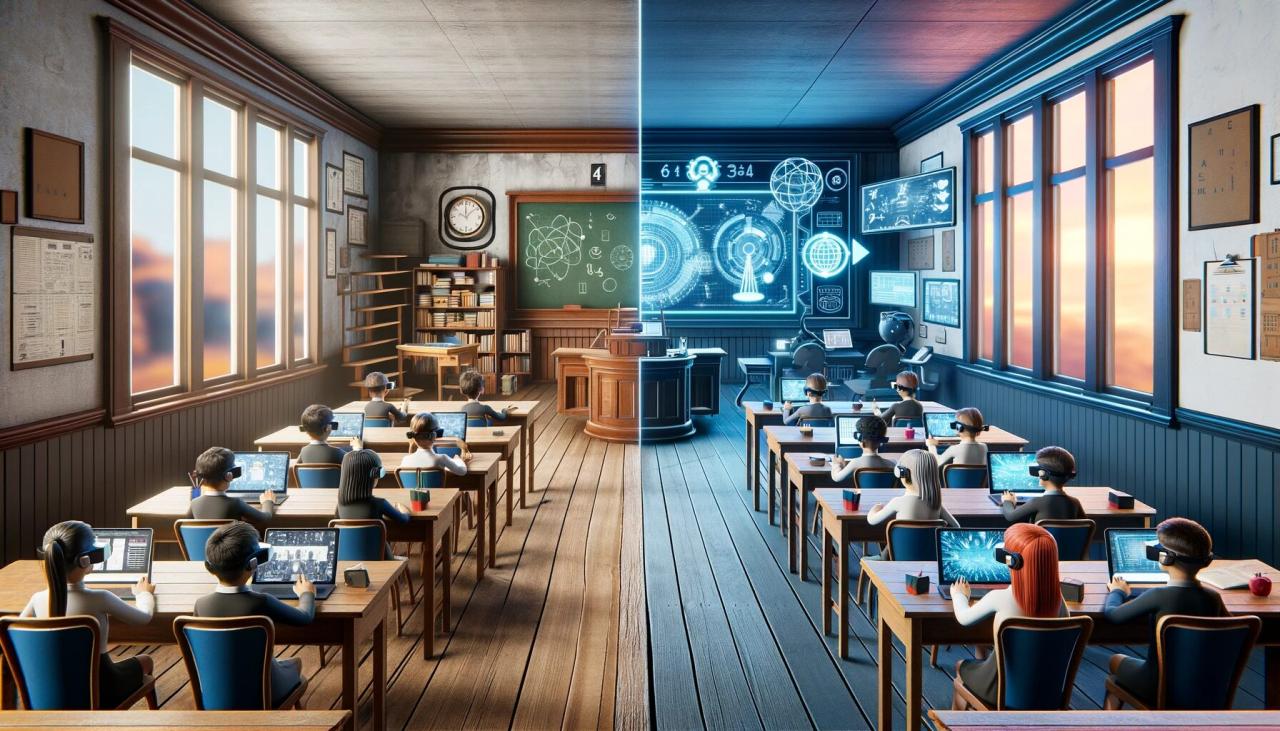
For decades, the image of education has been remarkably consistent: rows of desks facing a chalkboard, a teacher lecturing, and students passively receiving information from textbooks. This traditional model, often called the “factory model” of education, served its purpose in a different era. However, the 21st century has ushered in a seismic shift, driven by the ubiquity of digital technology. The smartphone, a device once banned from classrooms as a distraction, is now emerging as a powerful catalyst for a pedagogical transformation. This is not merely about incorporating technology into old methods; it is a fundamental reimagining of how, when, and where learning occurs. The question is no longer if digital learning will influence education, but to what extent it will replace, augment, and redefine the traditional classroom landscape.
This revolution, often termed the “Digital Classroom Revolution,” is dismantling the physical and temporal walls of the classroom. It promises a future of hyper-personalized, accessible, and engaging education. Yet, it also raises critical questions about equity, socialization, and the very nature of knowledge itself. This in-depth exploration will dissect the forces driving this change, the tangible benefits for learners, the significant challenges we must overcome, and the evolving role of educators in this new ecosystem.
A. The Unstoppable Drivers Behind the Digital Learning Surge
The move towards smartphone-integrated learning is not a random trend but a response to powerful global forces. Understanding these drivers is key to appreciating the inevitability and scale of this shift.
A. The Pervasiveness of Mobile Technology: Smartphone penetration is nearing ubiquity globally. For millions, especially in developing nations, a smartphone is the primary, and often only, portal to the internet. This makes it the most logical and accessible device for delivering educational content, bypassing the need for expensive computer labs or personal laptops.
B. The Demand for Personalized Learning Pathways: The traditional classroom operates on a “one-size-fits-all” model. Smartphone learning platforms leverage Artificial Intelligence (AI) and sophisticated algorithms to create unique learning journeys for each student. The system adapts in real-time, offering remedial content to a student struggling with a concept or advanced challenges to one who has mastered it, ensuring no one is left behind or held back.
C. The Rise of Microlearning and Bite-Sized Content: Modern attention spans and cognitive science favor short, focused bursts of information. Smartphones are the perfect vehicle for microlearning—5 to 10-minute video lessons, interactive quizzes, and flashcards that can be consumed during a commute or between other tasks. This “learning in the flow of life” is far more effective than hour-long lectures for knowledge retention and application.
D. Global Connectivity and Collaborative Potential: The internet has erased geographical boundaries. Through their smartphones, students in a rural village can collaborate on a science project with peers in a major city on another continent. They can access global databases, participate in international forums, and gain diverse perspectives that a single textbook or teacher could never provide.
E. The Catalyst of Necessity: The COVID-19 Pandemic: The global lockdowns acted as a forced, large-scale experiment in remote learning. Overnight, schools and universities had to adopt digital tools to maintain educational continuity. This period, despite its challenges, demonstrated the viability of remote learning and accelerated the adoption of educational technology by years, if not decades.

B. A Multifaceted Arsenal: The Tangible Benefits of Smartphone-Enabled Education
The advantages of integrating smartphones into learning extend far beyond mere convenience. They touch upon the core objectives of education: understanding, retention, and application.
A. Unprecedented Access and Radical Inclusivity: For students with physical disabilities, those in remote areas, or those who cannot attend traditional schools due to health or economic reasons, smartphone learning is a lifeline. It provides access to quality education that would otherwise be out of reach. Furthermore, it supports diverse learning needs with features like text-to-speech for the visually impaired, speech-to-text for those with dysgraphia, and translation tools for non-native speakers.
B. Fostering Engagement Through Interactive Immersion: Passive listening is replaced by active doing. Educational apps use gamification awarding points, badges, and levels to make learning addictive. Interactive simulations allow students to conduct virtual chemistry experiments, explore the human body in 3D, or manipulate historical events to see alternative outcomes. This transforms learning from a chore into an engaging and memorable experience.
C. The Empowerment of Self-Paced, Mastery-Based Learning: In a traditional classroom, the pace is set by the curriculum and the median student. Smartphone learning shatters this constraint. A student can pause, rewind, and rewatch a complex explanation until they achieve mastery. This fosters a growth mindset, where the goal is understanding, not just keeping up with the class.
D. Instantaneous Feedback and Data-Driven Insights: Instead of waiting days for a graded paper, students receive immediate feedback on quizzes and assignments through learning apps. More importantly, these platforms generate vast amounts of data on student performance. Teachers can analyze this data to identify class-wide misconceptions, pinpoint individual struggling students, and tailor their instruction with surgical precision.
E. Cultivating Essential 21st-Century Skills: Using smartphones for learning inherently develops digital literacy, a non-negotiable skill in the modern workforce. Furthermore, collaborative projects conducted via digital platforms teach communication, project management, and online etiquette. Students learn to critically evaluate online information, a crucial aspect of modern media literacy.
C. Navigating the Minefield: Critical Challenges and Thoughtful Solutions
The path to a digitally-integrated education system is not without significant obstacles. Acknowledging and proactively addressing these challenges is paramount to ensuring the revolution is equitable and effective.
A. The Persistent and Pervasive Digital Divide: The most glaring challenge is the gap between those with access to technology and reliable internet and those without. This divide can exacerbate existing social and economic inequalities. A student without a high-end smartphone or stable Wi-Fi is at a severe disadvantage.
-
Potential Solutions: Governments and institutions must invest in public broadband infrastructure and provide subsidized devices and data plans for low-income families. Schools can create offline-accessible content and utilize community centers as internet hubs.
B. The Ever-Present Threat of Distraction: The same device that hosts an educational app also contains social media, games, and messaging services. The potential for multitasking and distraction is immense, which can severely undermine the learning process.
-
Potential Solutions: This requires a dual approach. Technologically, the use of “focus mode” apps or dedicated educational profiles can lock down non-essential functions during study time. Pedagogically, educators must design lessons that are so compelling and interactive that they naturally capture and hold student attention.
C. The Paramount Importance of Data Privacy and Security: Educational apps collect sensitive data on minors, including their performance, learning habits, and even biometric data. The risk of this data being misused, sold, or hacked is a serious ethical and legal concern.
-
Potential Solutions: Strict data privacy regulations (like GDPR and COPPA) must be enforced. Schools and parents should carefully vet the privacy policies of any educational technology used, preferring platforms that are transparent about data collection and that prioritize end-to-end encryption.
**D. The Potential Erosion of Social-Emotional Learning (SEL): Traditional schools are not just academies of knowledge; they are laboratories for socialization. They teach children how to navigate complex social interactions, build empathy, resolve conflicts, and work in teams. An over-reliance on remote, screen-based learning could stunt the development of these vital soft skills.
-
Potential Solutions: The future model is likely hybrid. Smartphone learning can handle content delivery and practice, freeing up valuable in-person class time for collaborative projects, discussions, debates, and team-building activities that explicitly develop SEL.
E. The Risk of Teacher Deskilling and Overwork: There is a fear that technology could replace teachers. Conversely, a poorly implemented tech strategy can burden teachers with learning new software, managing digital platforms, and providing tech support, distracting them from their core teaching role.
-
Potential Solutions: Professional development is crucial. Teachers must be trained not just to use technology, but to integrate it pedagogically. The goal is to position the teacher as a facilitator, mentor, and guide who uses technology-driven insights to enhance their human touch, not replace it.
D. The Evolution of an Ecosystem: The Changing Role of Teachers and Classrooms
In the digital classroom, the roles of both teacher and physical space undergo a profound evolution. They are not eliminated; they are transformed into something more dynamic and impactful.
A. The Teacher as Facilitator and Mentor: The teacher shifts from being the “sage on the stage” to the “guide on the side.” Their primary role is no longer to dispense information but to curate resources, facilitate discussions, challenge thinking, and provide personalized support and mentorship. They help students navigate the vast sea of online information and apply their knowledge to real-world problems.
B. The Physical Classroom as a Collaborative Hub: With direct instruction moved to digital platforms (a model known as the “flipped classroom”), the physical classroom is repurposed. It becomes a dynamic space for collaboration, hands-on projects, maker spaces, and Socratic seminars. It transforms from a lecture hall into a workshop or a design studio.
C. The Rise of the Blended Learning Model: The future is not a binary choice between traditional and fully online learning. The most effective model is blended learning, which strategically combines the best of both worlds. Students might learn core concepts through their smartphones at their own pace and then come together in a physical (or virtual) classroom to apply that knowledge through collaborative, teacher-guided activities.
E. A Glimpse into the Future: Emerging Technologies on the Horizon
The current wave of smartphone learning is just the beginning. Several emerging technologies are poised to deepen this transformation further.
A. Artificial Intelligence (AI) and Adaptive Learning: AI will power hyper-personalized learning environments that not only adapt to a student’s pace but also to their learning style and emotional state, offering encouragement or alternative explanations as needed.
B. Augmented Reality (AR) and Virtual Reality (VR): AR can overlay digital information onto the physical world imagine pointing a smartphone at a textbook diagram and seeing a 3D heart beating. VR can create fully immersive historical recreations or scientific simulations, offering experiential learning that is otherwise impossible.
C. Blockchain for Educational Credentials: Blockchain technology could be used to create secure, verifiable, and portable digital records of a student’s achievements, from micro-credentials to full degrees, reducing fraud and simplifying university applications and job searches.
Conclusion: A Symbiotic Future, Not a Total Replacement
The narrative that smartphone learning will completely “replace” the traditional classroom is an oversimplification. The reality is more nuanced and more promising. The traditional classroom, in its rigid, industrial-age form, is indeed becoming obsolete. However, the core principles of community, mentorship, and guided collaboration remain vital.
The future of education lies in a sophisticated, symbiotic ecosystem. In this model, the smartphone and digital platforms handle the efficient, personalized, and accessible delivery of information and skill practice. This, in turn, liberates the human teacher and the collaborative physical space to focus on the higher-order tasks that technology cannot replicate: fostering critical thinking, nurturing creativity, building character, and facilitating deep, meaningful human connection. The ultimate goal of the Digital Classroom Revolution is not to remove the teacher from the equation, but to empower them with tools and insights to fulfill their most important role: unlocking the unique potential within every single student.