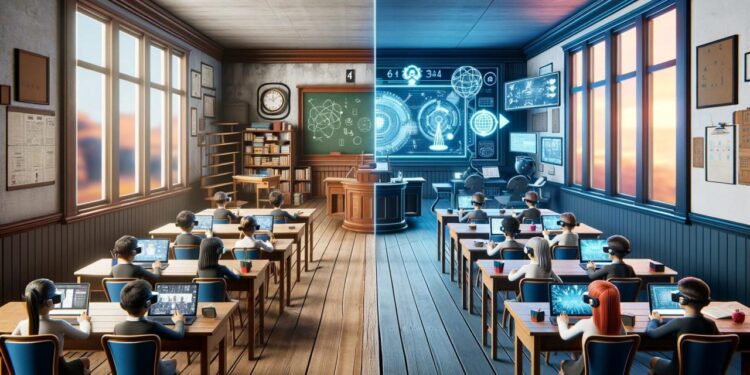
Imagine a classroom where no student is left behind, and no student is held back. A learning environment where the curriculum molds itself to the intellect, passions, and pace of each individual, rather than forcing a one-size-fits-all model. This is not a distant dream from a sci-fi novel; it is the imminent future of education, propelled by the powerful convergence of technology, data, and a deeper understanding of human cognition. Personalized learning is evolving from a pedagogical buzzword into a tangible, transformative force set to redefine the very foundations of how we teach and learn. This comprehensive exploration will demystify the future of personalized learning, examining its core drivers, the groundbreaking technologies at its heart, the challenges it must overcome, and the profound implications for learners, educators, and society at large.
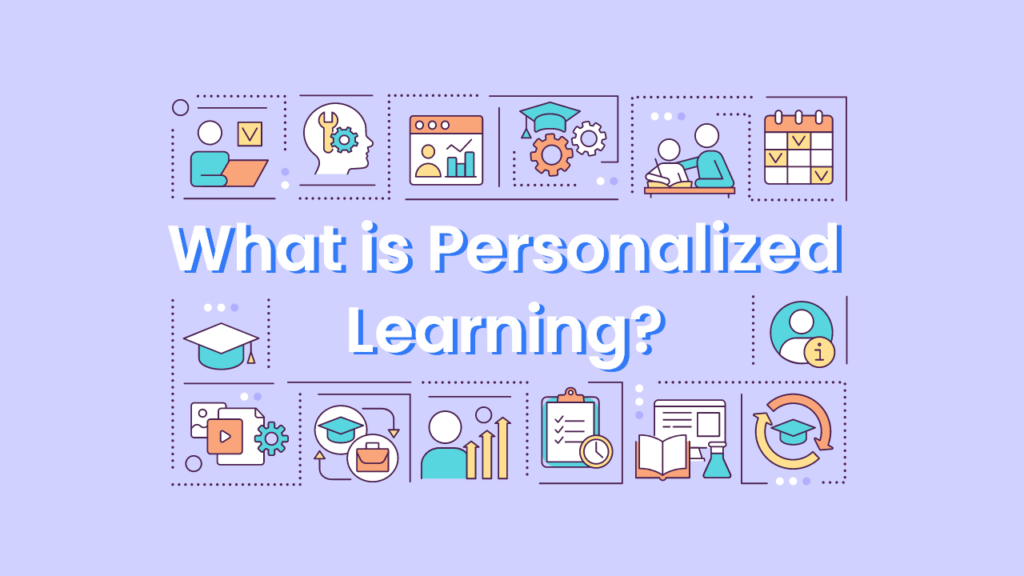
The traditional educational model, largely unchanged since the Industrial Revolution, operates on a factory-line principle. Students are grouped by age, moved through a standardized curriculum at a uniform pace, and assessed with uniform tests. This system, while efficient for mass instruction, inevitably creates gaps. The quick learner grows bored and disengaged, while the struggling student falls further behind, often developing a lifelong aversion to the subject. Personalized learning shatters this archaic paradigm. It is an educational approach that aims to customize learning for each student’s strengths, needs, skills, and interests. The future of this approach is not merely about letting students choose their own project topics; it is about creating a dynamic, responsive, and deeply human educational ecosystem.
A. The Core Pillars of Next-Generation Personalized Learning
The future of personalized learning rests on several interconnected pillars that distinguish it from simpler differentiated instruction models.
A. The Shift from Standardized to Individualized Mastery
The goal moves from “covering the syllabus” to ensuring every student achieves genuine mastery of a subject. This means the time spent on a topic becomes variable, while the level of understanding required is fixed. Students progress only after they have demonstrated proficiency, eliminating the foundational cracks that can cause entire academic structures to collapse later on.
B. Data as the Diagnostic Engine
In the future classroom, data is not just a final grade in a report card. It is a continuous, real-time stream of information. Every click on a learning module, every wrong answer on a quiz, every time a student replays a video explanation it all generates data. This data is aggregated and analyzed to build a nuanced profile of each learner, identifying knowledge gaps, optimal learning modalities, and even moments of peak concentration.
C. Learner Agency and Voice
Personalized learning empowers students to take ownership of their educational journey. They are given meaningful choices in how they learn, what they learn, and how they demonstrate their learning. This fosters intrinsic motivation, critical thinking skills, and self-advocacy attributes far more valuable in the modern workforce than rote memorization.
D. The Evolving Role of the Educator
The teacher transforms from a “sage on the stage” to a “guide on the side.” Their role becomes more complex and more rewarding. They are mentors, data interpreters, intervention specialists, and facilitators of rich, collaborative discussions. Freed from the burden of one-way lecturing, they can focus on providing targeted, one-on-one support and fostering social-emotional skills.
B. The Technological Vanguard: AI, Analytics, and Immersive Worlds
The theoretical framework of personalized learning has existed for decades. What makes its future so potent today is the suite of advanced technologies now available to bring it to life at scale.
A. Artificial Intelligence and Adaptive Learning Platforms
AI is the brain of the personalized learning system. Sophisticated algorithms power adaptive learning platforms that adjust the difficulty and sequence of educational content in real-time. If a student struggles with a concept like “photosynthesis,” the platform doesn’t just mark it wrong. It might offer a simpler explanation, a diagram, a video, or a set of prerequisite practice problems. Conversely, if a student aces a topic, the system automatically advances them to more challenging material, preventing boredom and maintaining engagement. These platforms can generate infinite practice problems and provide instant, detailed feedback, offering a level of individual support impossible for a single teacher in a class of 30.
B. Learning Analytics and Predictive Modeling
This is the predictive conscience of the system. By analyzing patterns in a student’s performance data, learning analytics can flag at-risk students long before they fail an exam. It can predict which students might struggle with an upcoming unit based on their prerequisite knowledge, allowing for preemptive intervention. For educators, these analytics are distilled into intuitive dashboards that provide a holistic view of the entire class and each student within it, highlighting trends and pinpointing exactly where help is needed most.
C. Immersive Technologies: VR and AR
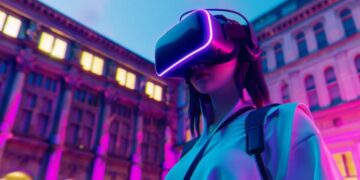
Virtual and Augmented Reality are set to revolutionize experiential learning. Instead of just reading about ancient Rome, students can take a virtual walk through the Roman Forum. Instead of watching a video of a heart dissection in biology, medical students can perform the procedure in a risk-free virtual environment. AR can overlay complex diagrams onto a physical desk, making abstract concepts tangible. These technologies cater to kinesthetic and visual learners, providing unforgettable, hands-on experiences that deepen understanding and retention.
D. The Power of Big Data and Curriculum Analytics
On a macro level, the aggregation of anonymized data from millions of students can provide unprecedented insights into how people learn. Which explanations are most effective? Where are the common stumbling blocks in a mathematics curriculum? This “big data” can be used to refine and improve educational content itself, creating textbooks and digital resources that are inherently more effective because they are designed based on evidence from actual learning patterns.
C. A Glimpse into a Personalized Learning Day in 2030
To make this future concrete, let’s follow a student named Maya on a typical day in 2030.
-
Morning: Maya begins her day by checking her personalized learning dashboard. Her AI assistant, which has analyzed her sleep and circadian rhythms, recommends she tackle her most challenging subject, physics, first. She puts on her VR headset and enters a simulation to explore gravitational forces on different planets, completing a series of interactive challenges.
-
Late Morning: In her human-led seminar, the teacher, Mr. Davis, uses his analytics dashboard to see that 60% of the class has a gap in understanding a key historical concept. He pivots from his planned lecture to facilitate a Socratic debate on that topic, while the AI system automatically provides supplementary reading to the 40% who have already mastered it.
-
Afternoon: Maya works on her passion project: coding a game that teaches players about marine biology. Her learning path has been customized to include just the right programming and biology modules she needs for this project. She collaborates with a student in another country via a holographic interface, and her AI mentor suggests resources on game design logic.
-
Evening: Maya’s parent receives a report not just on her grades, but on her progress. It highlights her growing resilience in problem-solving, her collaboration skills from the project, and recommends a community science fair to further her interests.
D. Navigating the Challenges and Ethical Minefields
This promising future is not without significant hurdles. Addressing these challenges proactively is critical to ensuring equitable and ethical implementation.
A. The Digital Divide and Equity Concerns
There is a grave danger that personalized learning could exacerbate existing inequalities. If access to high-speed internet, modern devices, and sophisticated software becomes a prerequisite for a quality education, we risk creating a two-tiered system. Policymakers and educational institutions must make monumental investments in infrastructure and ensure that these transformative tools are available to all students, regardless of their socioeconomic background.
B. Data Privacy and Security
The amount of sensitive data collected on minors is staggering. How is this data stored? Who owns it? How is it used? Could it be used to label students or limit their future opportunities? Robust, transparent data governance policies and stringent security measures are non-negotiable. Students and parents must have control over their data and a clear understanding of how it is being utilized for educational benefit.
C. The Human Touch: Avoiding the “Algorithmic Cage”
Education is not just about the transfer of information; it is a deeply human endeavor centered on relationships, inspiration, and social-emotional development. An over-reliance on algorithms could lead to a sterile, isolated learning experience. The future must be a hybrid one, where technology handles the repetitive tasks of drilling, assessment, and content delivery, freeing up human teachers to do what they do best: inspire, connect, mentor, and nurture creativity and critical thinking.
D. Teacher Training and Systemic Change
Implementing this model requires a massive shift in teacher professional development. Educators need to be trained not only in using new technologies but also in interpreting data, coaching students, and designing flexible learning pathways. Furthermore, the entire education system from university admissions criteria to standardized testing and funding models must evolve to support and reward personalized, mastery-based progress rather than seat time and standardized test scores.
E. The Long-Term Impact: Reshaping Society and the Workforce
The successful implementation of personalized learning has ripple effects that extend far beyond the classroom walls.
A. Cultivating Lifelong Learners
In a world of rapid technological change, the jobs of tomorrow may not exist today. The ability to learn, unlearn, and relearn is the most critical skill for the 21st century. Personalized learning, by its very nature, teaches students how to learn. It fosters curiosity, self-direction, and adaptability, creating individuals who are prepared for a lifetime of intellectual growth and career pivots.
B. Unleashing Creativity and Innovation
When education is no longer about memorizing facts for a test, cognitive bandwidth is freed for higher-order thinking. Students who are not constrained by a rigid curriculum are empowered to explore their passions, take intellectual risks, and engage in creative problem-solving. This is the breeding ground for the innovators, artists, and entrepreneurs who will drive future progress.
C. A More Equitable and Inclusive Society
At its best, personalized learning is the ultimate tool for educational equity. It can identify and support students with learning disabilities, non-native speakers, and gifted students alike, providing each with the specific scaffolding they need to succeed. By valuing different strengths and pathways, it creates a more inclusive environment that celebrates neurodiversity and varied talents, potentially leading to a fairer and more capable society.
Conclusion: A Human-Centric Future, Powered by Technology
The future of personalized learning is not a dystopian vision of children being educated by screens in isolation. On the contrary, it is a profoundly human-centric vision, but one that is intelligently supported by technology. It is a future where the unique potential of every child is recognized, nurtured, and celebrated. The journey toward this future is complex and demands careful navigation of ethical, financial, and practical challenges. However, the potential reward a world where every individual is equipped with the knowledge, skills, and love of learning to thrive is a goal worth striving for. The transformation has already begun, and it promises to redefine education from a monolithic institution into a lifelong, personalized, and empowering journey for all.